
Small Craft Stories: RIVTEK Boats
posted by
We’re on the lookout for stories from every corner of the boating world—small boat builders, fix-it shops, gear makers, and everyone in between. No matter the size of your operation, we’d love to feature you in a piece and share your story with our community. Shoot us an email at tim@smallcraftsales.com and tell us a little about yourself.
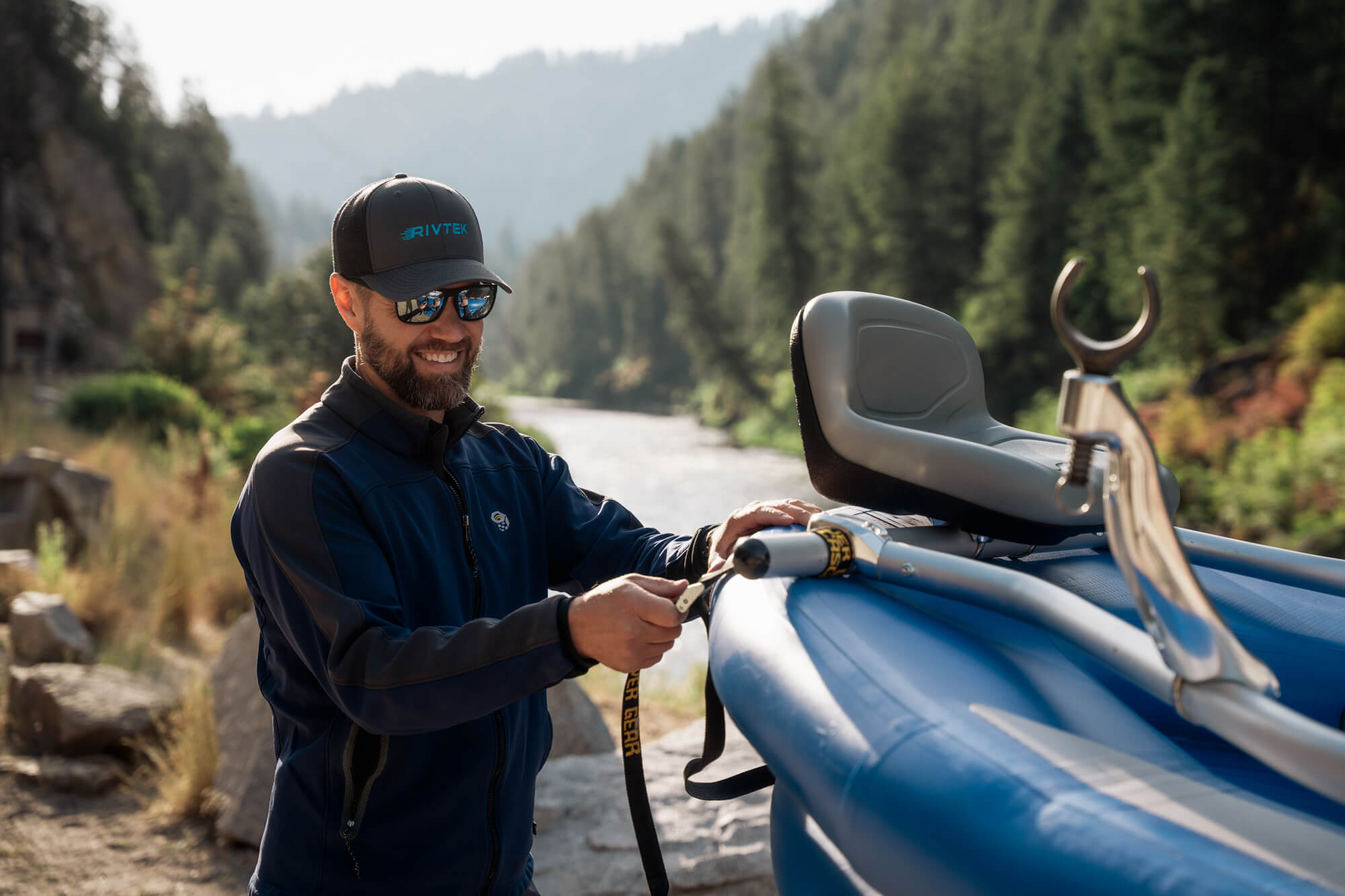
This week we're featuring RIVTEK Boats and their inventor Ben Tester.
It’s easy to judge these boats by their looks—and that would be a mistake. We think… A lot of indispensable ideas, from rolling suitcases, bikes and shipping containers, were laughed at early on, and Rivtek’s design has that same quiet, “wait a minute…” potential. Having not rowed one we can’t say for certain, but after talking to the inventor Benjamin Tester for a good bit we're quite a bit more convinced that he might be on to something. Time will tell and we definitely want to row one, but here's the conversation we had with Ben below. Let us know what you think?
SCS: For someone who’s never seen one, how would you explain RIVTEK boats in a couple of sentences — especially compared to traditional round boats used on rivers?
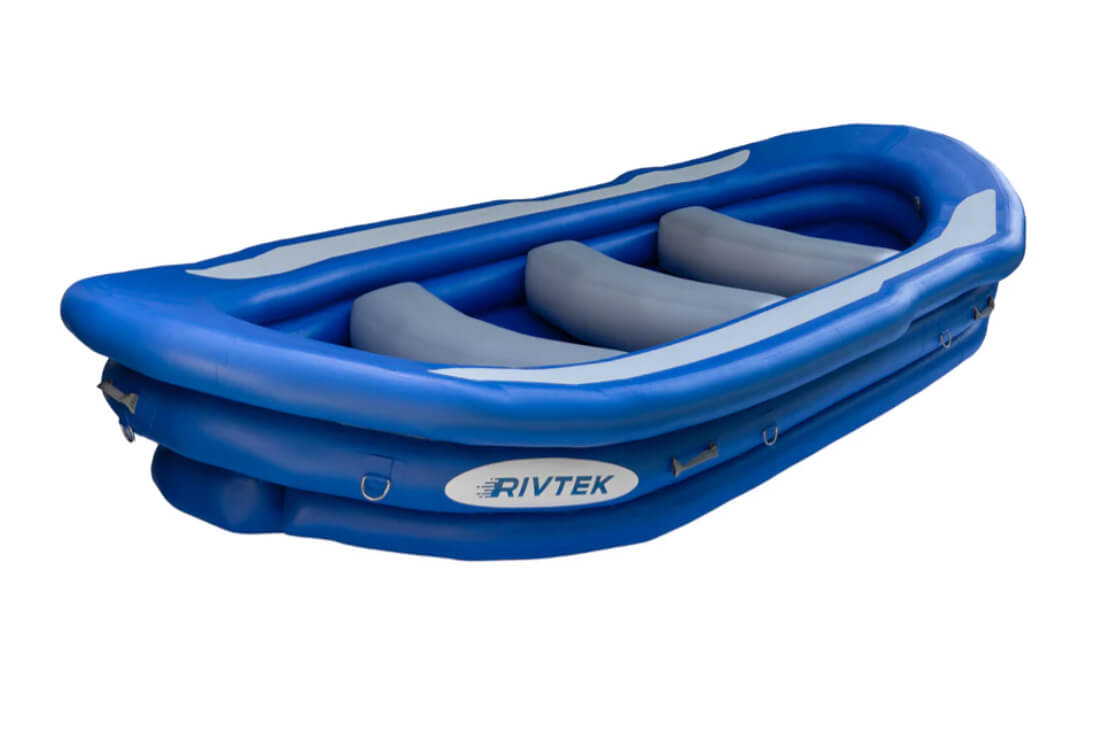
Answer: RIVTEK self-bailing rafts are built entirely from heat‑welded drop‑stitch material. This stout material provides the foundation for two key advantages. First, they do not bend or twist like standard tube-rafts that buckle in larger whitewater; RIVTEKs retain more momentum, helping you navigate demanding conditions. Second, RIVTEKs have a much larger front bow surface area compared to standard tube-rafts with their blunt, less aerodynamic fronts. So, when a RIVTEK drops into a wave or hole, the extra surface area lifts the raft up and over, while a tube-raft tends to crash into the bottom of the whitewater. Beyond being designed to dominate whitewater, RIVTEKs also include thoughtful features like flat thwarts and a central water channel that keep paddlers comfortable, secure, and tracking cleanly downriver. Simply put, RIVTEK rafts help you enjoy more whitewater.
SCS: What was missing in existing round boats that made you want to build something different for river use?
Answer: Comfort and stability were missing. When I took friends and family rafting in tube-style rafts, I could tell they would have a better experience if they were more comfortable and secure. RIVTEK’s solution revolves around a drop-stitch design, which is far more robust than a hollow, round tube and allows passengers to enjoy more whitewater with fewer distractions.
SCS: Was there a specific day on a river when you realized the typical round-boat approach just wasn’t cutting it?
Answer: Yes. During the summer of 2013, I took my wife, my mom, my mother-in-law, and my grandmother-in-law rafting on a fairly simple Class III river north of Boise. Each rapid, they kept falling into the raft, bumping into one another and the cooler, and not staying in place on the round tube thwarts. I went home thinking there had to be something better, something more stout for paddlers. That night, I dug into the history of tube-rafts and realized their basic form dates back to World War II. I knew it was time for a big upgrade.
SCS: What about anglers? What’s the first difference they might notice on a RIVTEK?
Answer: The very first thing they notice is the extra room inside the raft. Even though a RIVTEK is 13.5 feet long, it has about 21% more internal space than the average 14-foot tube-raft. This is extra room for coolers, gear, and casting. It’s quite noticeable. The second thing they notice is that the raft is much more stable and does not bend and twist like traditional tube-rafts. This is especially important during casting, when anglers want to focus on the river rather than balance on a wobbly tube-raft.
SCS: What’s the biggest limitation of round boats in whitewater that RIVTEK was designed to overcome?
Answer: The front end of a tube-raft is inherently blunt because it’s made from a large round tube. When this blunt front end hits a wave or hole, a significant amount of kinetic energy is lost, leading to instability, stalling in whitewater, and an increased risk of flipping. The RIVTEK’s bow is designed to retain as much momentum as possible and to push the raft up and over waves and holes rather than through them. If you look at the side profile of a tube-raft, it resembles a submarine—a vessel meant to dive underwater. The side profile of a RIVTEK, by contrast, resembles a ship’s bow—a vessel designed to ride up and over waves. This results in a much more stable and capable whitewater experience for rafters.
SCS: Is there a design element that doesn’t look radical at first glance, but fundamentally changes how the boat behaves in current?
Answer – The RIVTEK floor is made up of three air chambers. The two outer chambers are eight inches thick, and the center chamber is six inches thick. Once the raft is in the water, a one-inch water channel forms that runs the entire length of the raft from bow to stern. The outer chambers funnel water into that channel, which locks onto the current and significantly improves the raft's tracking. At only one inch, the water channel doesn’t look radical, but it is definitely noticeable to paddlers, especially those who are used to guiding tube-rafts.
Hull Design & River Performance
SCS: Walk us through how the RIVTEK hull behaves differently from a traditional round boat in a river current.
Answer: Besides the water channel and the bow's large surface area mentioned earlier, the RIVTEK also has cantilevered sides. They act like the sides of a drift boat: when the raft begins to tip to port or starboard, the edge provides upward leverage at the raft's lowest point. The combined effect is a hull that tracks well, resists roll, and recovers quickly from large holes and waves.
SCS: How does your design affect tracking, maneuverability, and control when fishing downstream?
Answer: With a standard tube-raft, there is a giant 360-degree tube surrounding the boat, and that tube creates many friction points that interact with river currents in unexpected ways. That is why paddlers on tube-rafts are frequently adjusting their boats; they are essentially fighting currents that pull in different directions on the 360-degree tube. As mentioned earlier, the RIVTEK floor is built from three individual air chambers, which resemble paddleboards. This allows the current to flow consistently under the raft with far less friction than tube-rafts. With less friction in the floor and a water channel guiding the raft along the current, anglers can track, maneuver, and hold in eddies much more easily for fishing.
SCS: What types of rivers — gradient, depth, structure — were you thinking about most during the design phase?
Answer: The first river I rafted was the Main Salmon when I was eight years old. Over the years, I have also run the Lochsa, the Middle Fork of the Salmon, Owyhee, Hells Canyon, and a couple of dozen other western rivers. I have found that a wide 13.5-foot raft is the best all-around choice because it can handle multi-day rafting trips as well as tackle class IV with five to eight people. It also provides enough room for gear and fishing on those extra special multi-day permit-only trips.
NEW Question: Are RIVTEKs compatible with other rafting gear?
Answer: Yes. RIVTEKs are compatible with existing frames and other whitewater gear.
Design Philosophy
SCS: When designing RIVTEK, what’s one round-boat convention you intentionally ignored or challenged?
Answer: The round tube thwarts on a traditional tube-raft were intentionally ignored and challenged. Outside of rafting, I have never seen a seat made from a round column, and there is a reason for that. It is uncomfortable and extremely unstable, especially in whitewater. The round thwart columns also position rafters in a strange, contorted way. If you look at rafters on a standard tube-raft, their lower bodies face into the boat while their upper bodies are twisted toward the river. They often have part of their butt on the main tube and the other half between the thwart and the main tube. It is awkward, insecure, uneven, and uncomfortable. RIVTEK challenged the World War II era tube thwarts by making them flat and angled toward the whitewater. If you look at someone paddling in a RIVTEK, their upper and lower bodies face forward, are very stable, and have all-day comfort.
SCS: Are there compromises common in round boats that you simply weren’t willing to make?
Answer: One advantage of using drop-stitch material is that it is free of bladders and baffles. Bladders and baffles are the two features most prone to failure on a standard tube-raft. If you have experienced the failure of one of these components, you know how expensive and time-consuming repairs can be. Thanks to the drop-stitch design, people rafting RIVTEKs do not have to worry about these leak-prone features.
SCS: How much of RIVTEK’s evolution comes from engineering calculations versus time spent rowing or running rivers?
Answer: Between the engineers and me, we logged hundreds of hours in CAD and ran extensive CFD (Computational Fluid Dynamics) simulations. I spent more hours than I can count testing RIVTEK designs on a computer. It was a passion, a calling, and yes, a bit of an obsession. Once the hull was refined digitally, we spent years validating it on real rivers. After countless prototypes and miles on the water, the payoff is simple: rafters are rewarded by the RIVTEK design every time they go out with friends and family, and that makes it all worthwhile.
On-River Stories
SCS: Do you have a moment where a RIVTEK handled a piece of river water that would’ve been uncomfortable or sketchy in a round boat?
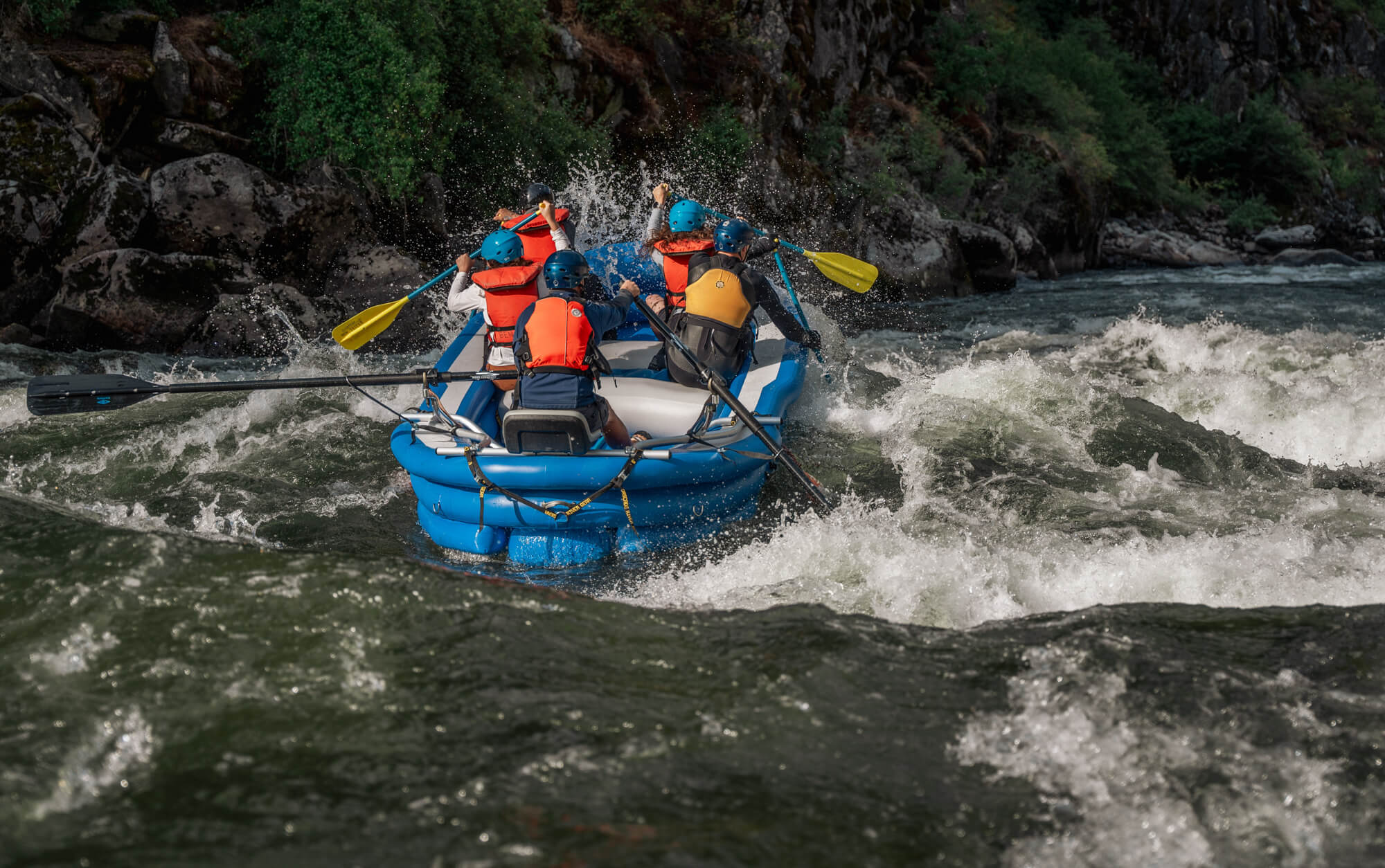
Answer: During a 2025 photoshoot on a demanding section of the South Fork of the Payette, the boat handled class IV rapids with ease, and my passengers were noticeably relaxed. Dozens of rafters watched and commented on how composed the raft remained through the whitewater
SCS: What’s the most demanding river environment someone has taken one of your boats into so far?
Answer: South Fork of the Payette River (Class IV).
Who It’s For
SCS: Who is the ideal RIVTEK owner coming from a round-boat background?
Answer: I would say just about anyone. Who doesn’t want to be more comfortable on the river, more secure in whitewater, and able to dominate challenging rapids? RIVTEK lets people enjoy more whitewater. That isn’t just our slogan but our mission.
SCS: Who might be happier staying in a traditional round boat?
Answer: Some people enjoy the tossed-around feel of a tube-raft on class III runs. If someone typically only runs class III, likes the bounce, and doesn’t care much about comfort or stability, a tube-raft will still suit them.
Looking Ahead
SCS: How do you see RIVTEK influencing the future of river-specific boat design?
Answer: RIVTEK has certainly challenged the status quo in whitewater rafting design. For decades, people accepted discomfort and instability as part of the rafting experience because there were no real alternatives. RIVTEK shows there is now a choice: tube-rafts or RIVTEKs. Over time, I expect other designers to adopt similar principles we championed and for river-specific rafts to become more diverse and purpose-driven.
SCS: Are there refinements or new designs in the works that continue to push beyond what round boats can do on rivers?
Answer: Yes. We expect to finish testing our RIVTEK cataraft this spring (2026), and early results are promising. We also have several hull concepts undergoing computer simulations and prototype cycles for future summer releases.
SCS: Where can people learn more or see RIVTEK boats in action?
Answer: Our website, RIVTEKgear.com, has more detailed information. Also, if you are in or near the Boise area, we can arrange a demo raft.
Contact me at btester@RIVTEKgear.com.