What’s a River Fund? A Conversation with Jordana Barrack
posted by
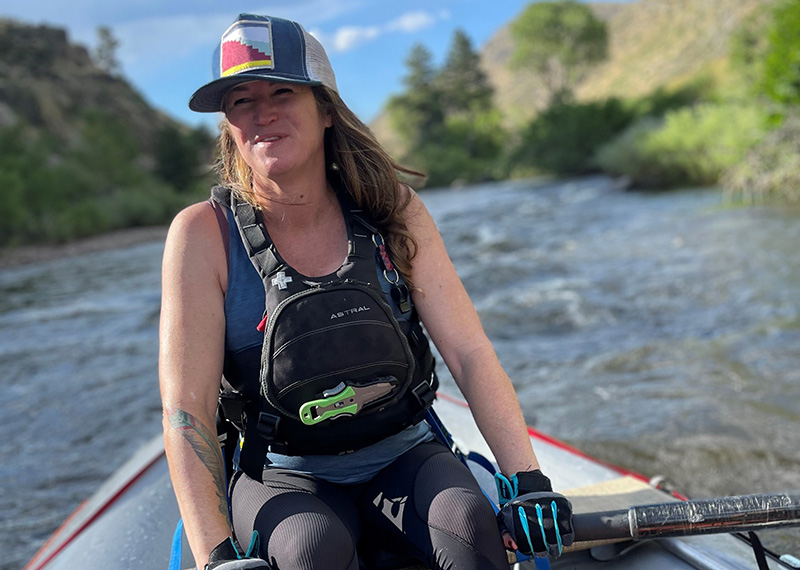
Jordana Barrack has spent much of her career working at the intersection of water, agriculture, philanthropy, and community stewardship. As Executive Director of the Mighty Arrow Family Foundation, a board member of the Coalition for the Poudre River Watershed, and a national board member of American Rivers, water has been a recurring theme throughout her professional life. Now she's helping launch the Poudre River Fund, a new effort focused on protecting and enhancing one of Colorado's most beloved rivers.
For people hearing about it for the first time, what exactly is a River Fund?
The best way I like to describe it is to imagine if the river had its own bank account! How would it take care of itself if it had its own money to pay for stewardship projects, and boat ramps, and other projects that help a river thrive? Well that’s what we’re trying to build. Technically, a River Fund is a community-governed pot of funds that are designated for a set of goals related to the needs of a watershed. Through our work at Mighty Arrow, we were seeing other river funds pop up around the western US.
River funds are managed in similar ways to endowments. The money is actively invested in public equities and bonds, similar to your retirement accounts. Each year, there is a look back period to determine what the average earnings were for the fund. That then determines the re-granting budget that the fund gets to activate for projects in the watershed. For example, on average a fund might earn 4.5%. If the fund has $10 million in its fund, then 4.5% in earnings could yield $450,000 for the year to invest in river health projects. Then it does that every year, year over year, and that money really starts to add up to significant impact for a river and its community.
Why does the Poudre River need a dedicated fund right now?
Well, you could say just about every river needs a dedicated fund like this to help our watersheds adapt to a warming environment with increased pressure on water use from our municipalities and industry. But, for the Poudre River, this is a hard-working river. At the top of the headwaters is Cameron Pass and Rocky Mountain National Park. This mountain range faced Colorado’s #1 and #2 largest wildfires in Colorado history back in 2020, Cameron Peak and East Troublesome fires. While the recovery is in progress, there is still a lot of investment needed to stabilize a healthy forest system. This is the starting point for the high quality water that the municipalities on the northern Front Range depend on.
As the river cascades downward through the Poudre Canyon, our recreation outfitters begin to intersect their economies with the river through fishing and rafting excursions. Water diversion dams begin to break up floatable river reaches, compounding the accessibility people have with the river. This also is the point where water begins to be diverted out of the stream channel, flowing through tunnels and irrigation ditches as it heads out onto crop lands and into treatment plants. The remaining water is too low to withstand the warming temperatures, stressing our fish populations as the channel meanders through the plains.
The farmlands that have relied on water from the Poudre for over a hundred years now are being purchased by interests outside our watershed, drying up farmland, and exporting its flows through new pipelines to supply the urban growth of north Denver. Neither our river nor our people get to benefit from that water. Where there is water there is opportunity, and we must protect what we have left of it.
The good news is, there are solutions to all these things! We just need to pool our resources together for more effective funding of these solutions.
There are already several great organizations working in the watershed. How does a river fund complement and support that existing work rather than duplicate it?
This is something that compliments the many organizations already working in the watershed. We need them to keep doing what they are doing. And they need access to more dependable funding. The River Fund functions more like a bank, it is not the entity on the ground doing the work.
In today’s political climate, federal and state programs that often provide grant dollars to our local watershed groups are unstable. From one administration to the next, priorities can shift. This is just a dynamic that happens in our current systems. But what would it look like for a community to step up together and pool the funding that brings stability to the usual pendulum swing?
The other dynamic of federal and state funding opportunities includes the challenge of coming up with a “match.” The majority of public grant dollars require x% to be matched with private dollars. If we had a pooled fund locally that could function as our private match, that would unlock millions more in federal and state funding for our local projects. Often times that matching requirement creates a dynamic that limits how much our local organizations can apply for. This fund can unlock even more money for our projects on the river.
Your career has included agriculture, business, philanthropy, and water stewardship. How have those experiences shaped your thinking about rivers and conservation?
Similar to the many personalities the Poudre River takes on as it travels from the high mountains down to its confluence with the South Platte, my career too has had many phases. Best summed up by river rapids, agriculture, and beer. Those things are all connected when you look at it.
Mostly though, my passion for conservation of rivers comes from my personal connections. There are so many metaphors for the lessons I’ve taken from rivers over the years. But the most important part is how they bring my husband & I closer to being human together. We have run many of the great western rivers in Idaho, Colorado, Wyoming, and elsewhere in the southwest. We’ve done multiday solo trips, and long mile single day floats. Sometimes we fish, sometimes we hyside, but ultimately we just want to be out there, on the water. There is a rhythm to river life that nothing else can fill for us. Rivers carry us to places where we shed everything tugging at our attention and just be ourselves.
Today, access to multi-day river trips is getting harder and harder to win permits for. But it is still worth fighting to make sure those rivers continue to exist, continue to have clean water flowing down through their channels. Life depends on rivers. Beer depends on rivers too, to bring this back to my previous experience working in the beer industry with New Belgium Brewing. Most beers are 94% water, plus or minus depending on the abv. If you drink a New Belgium beer brewed in Fort Collins, Colorado, that 94% water came right out of the Poudre River. If we can reduce wildfire risk to our forests in the upper watershed, thereby reducing erosion and ash clouding up the river’s water quality, then we are actually protecting the quality of our favorite local brews. Coloradoans love their craft beer.
One thing that stands out about your work is an emphasis on listening and building relationships. How does that philosophy influence the way the Poudre River Fund is being built?
The way we try to work at Mighty Arrow is “in partnership” with the nonprofits we support. But that requires a balancing of the power dynamic between a funder and a grantee. What we say out loud, whether we mean to or not, carries weight. We like to roll up our sleeves and work through challenging problems with our grantees, because intellectually we enjoy the challenge, but we also have to acknowledge that ultimately it is the people in the nonprofit organization whom the work falls on. That has led us to ask the question, “how can we do a better job taking care of the people?”
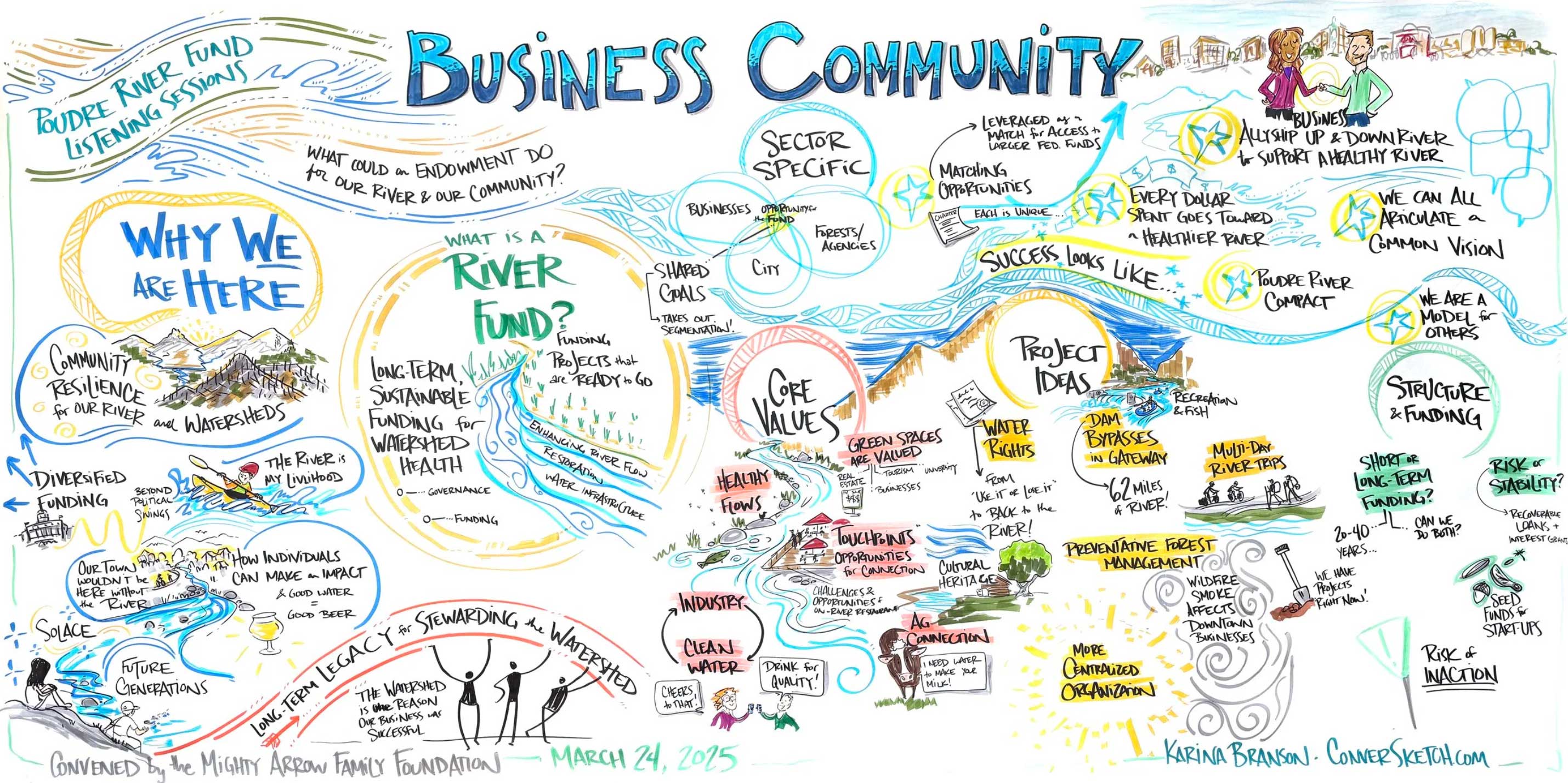
By asking that question in all our work, we were able to get deeper into the heart of the work and the challenges. But you can’t get there if you don’t create the right setting for the conversation. That includes helping people feel at ease, curating the space we host a conversation in, and actively demonstrating that you hear what others are saying. As we were exploring the feasibility and interest in the Poudre River Fund we hosted a series of community listening sessions for the different sectors surrounding the river to come into a space together and share their concerns, ideas, and values they each perceived around the river. The sectors included individuals from municipal water utilities & natural resource departments, the local business community, the agricultural community, and the environmental community. This feedback was captured by a graphic recorder, taking visual notes live in the meeting, and then was reviewed and sculpted into five collective goals that will guide the fund going forward, maintaining the broad community values embedded in the fund governance. Mighty Arrow’s team is here at the creation of the fund to help stand it up, but ultimately it is the community of northern Colorado that will own it going forward. That feels like a structure that will nurture relationships for a long time to come.
When people hear "river conservation," they often think only about fish or recreation. What are some of the less obvious ways a healthy Poudre River benefits local communities?
As I mentioned before, where there is water there is opportunity. Keeping water on a landscape has so many more benefits than we realize. While water traveling down through a stream system, a small amount is soaking into the ground making up the riparian zone. The more water in the river, the wider that riparian zone is. The zone surrounding a river ecosystem supports a lot of wildlife and biodiversity, but it also is creating a zone of resilience if a major wildfire were to occur. Rivers & streams create natural blocks for fighting back the intensity of a wildfire. There are amazing aerial photographs of beaver wetlands that were found untouched after a wildfire swept through a valley.
Working to reduce the severity of wildfire in our stream corridors is also good for keeping our drinking water downstream clean and affordable. The aftermath of wildfire results in increased sediment, ash, and other materials being swept into our waterways. Municipal water utilities then have to implement new or more costly methods for treating the city’s drinking water supply to remove that particulate load from the water. These added costs get passed on to rate payers, making our cost of living more expensive. If we invested in the upper watershed’s forest health instead, we might be able to stay ahead of catastrophic events that drive up water utility rates.
Agriculture is another connector to our river that most recreationists don’t think about. Ag is a major user of water being drawn from the river. Investing in irrigation infrastructure upgrades, soil health initiatives, and other water quality and quantity innovations on our local farmers helps to reduce the amount of water agriculture might need to consume. That excess water can then be leased to local cities, or to groups like the Colorado Water Trust who can hold water rights for environmental flows. Colorado Water Trust recently obtained a major win for environmental water leasing on the Poudre River. We are hoping the Poudre River Fund can one day help offset the costs of leasing water for the environment, putting that water back in the river for our fish, our floaters and boaters, and for our people to sit by when they just need to find respite from the river.
If the Poudre River Fund is successful, what changes would you hope to see in the watershed over the next decade?
Our municipal partners need help protecting our water supplies, our community groups need capacity support, and our urban areas need a bridge to the agricultural lands that steward the character we all fell in love with in Northern Colorado. We have solutions to all these things, we just need more financial capacity to invest in them. In ten years we hope to have a $20 million dollar fund that kicks out $1 million a year for regranting and investing into these solutions. Let’s say half of that annual granting budget could be used as private matching dollars to state and federal funding opportunities, which usually require at least a 25% match, unlocking another $2 million that flows toward our river health that year. That is significant leverage, and the fund keeps earning money in the meantime to do it again year over year. We slowly start ticking off the list of projects that surround our watershed.
There are other projects in the works to redesign diversion dams, add boat passage, and expand access along the Poudre River. In ten years, there is a chance a project of that scale is moving forward which the Poudre River Funds can be applied toward in partnership with Northern Water, City of Fort Collins, and others. In ten years the Poudre River Fund can step in to support shared capacity and infrastructure used by the many groups that work in the watershed, who typically raise money from zero each year to keep funding river health assessments and data systems. Like a baton pass, the River Fund can take over the annual financial expense of key infrastructure pieces, freeing up our nonprofits and water providers to use their dollars for greater innovation instead.
The greatest success of all will come from the average people who get to look at what the fund is investing in and feel a sense of pride and ownership in bringing it to life. Everyone has a chance to contribute to building this up, and empowering our community to take care of its own river. Again, if we can get more people to connect with the river, our community values will reflect that in our land use priorities, our water conservation implementation, and the way we play together.
For someone who loves the Poudre but isn't a scientist, policymaker, or major donor, what role can they play in helping the river thrive?
To start with….Talk about the river. Make sure it is present in your stories and your vocabulary. Overall, the river has a better chance if its average community members have a stronger sense that it even exists in the first place.
But if you can, make a donation to the Poudre River Fund. We are going to need a lot of people, and donations of all sizes, to build this thing. We’ve crunched the numbers, we need a thousand people to give $50, a hundred people to give $1000, and ten people to give $100,000. And then some. Everyone has a place in building this fund for our river…for the water of our future. If you’ve had an experience with the Poudre River in your life, then you’re on our team! Make a contribution. Your river will thank you for it.
Looking ahead, what gives you the most hope for the future of the Poudre River?
First, the people working on the health of our watershed give me hope. There are so many people that care. And they are working together, farmers and rafters, environmental nonprofits and our city water utilities, business owners... collaborating through multiple combinations of coalitions. They are the true leaders for our river.
But if we can pull off this fundraising goal for the Poudre River Fund…wow! That gives me a lot of hope for the river’s legacy generations from now.
I think its natural for us as people to question what is this all for? What does it matter that I care about the river’s vitality? Well, knowing that someone will one day stand on my shoulders to do even better things, gives me a sense of purpose and hope. Laying the foundation for this river fund becomes the structure for so many more people to care about the natural resources and living ecosystem in our backyard. And if this Poudre River Fund makes it even easier for other people to care about our river, maybe it will bring them hope too.
Learn more, get involved or make a donation to the Poudre River Fund.
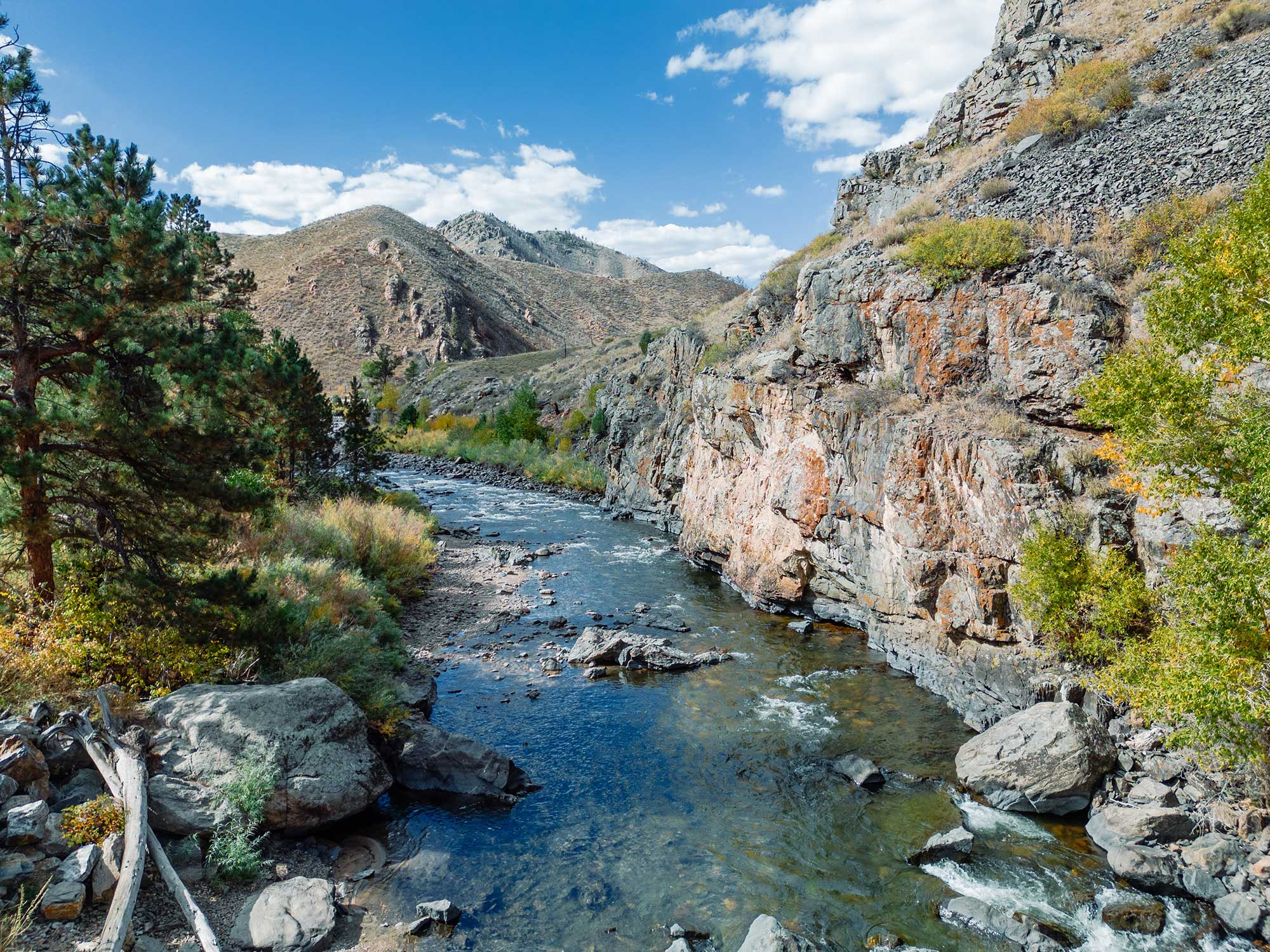
Photo Coutesy: Aaron Lavanchy